Quick answer: There is no single payment gateway that fits every small business. The best choice depends on where you sell, which payment methods customers expect, your transaction volume, the checkout experience you want, and how easily gateway activity can be reconciled in your books.
What a Payment Gateway Actually Does
A payment gateway is the technology layer that securely moves payment information from checkout to the processor and financial network. It helps turn a customer's payment action into an approved or declined transaction while supporting security and fraud controls.
Why Gateway Choice Matters
- Security and customer trust
- Familiar payment methods and smooth checkout
- Predictable total processing costs
- International country and currency coverage
- Reporting, refunds, chargebacks, and reconciliation
- Integration with websites, apps, subscriptions, or marketplaces
How an Online Payment Moves
- Customer starts checkout.
- Gateway securely transmits payment details.
- Processor requests authorization.
- Bank or network approves or declines the transaction.
- Merchant confirms the order and receives settlement according to the provider's payout schedule.
Six Questions to Ask Before Choosing
- Is the provider approved for my business and country?
- Which cards, wallets, bank methods, and currencies are supported?
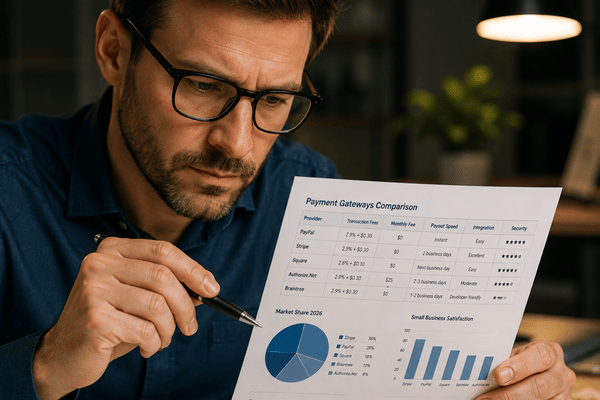
- What is the real cost after fixed fees, refunds, chargebacks, and FX?
- Will customers stay on my website or be redirected?
- Do I need hosted checkout, plugins, APIs, or recurring billing?
- Can the reports be reconciled cleanly with my accounting system?
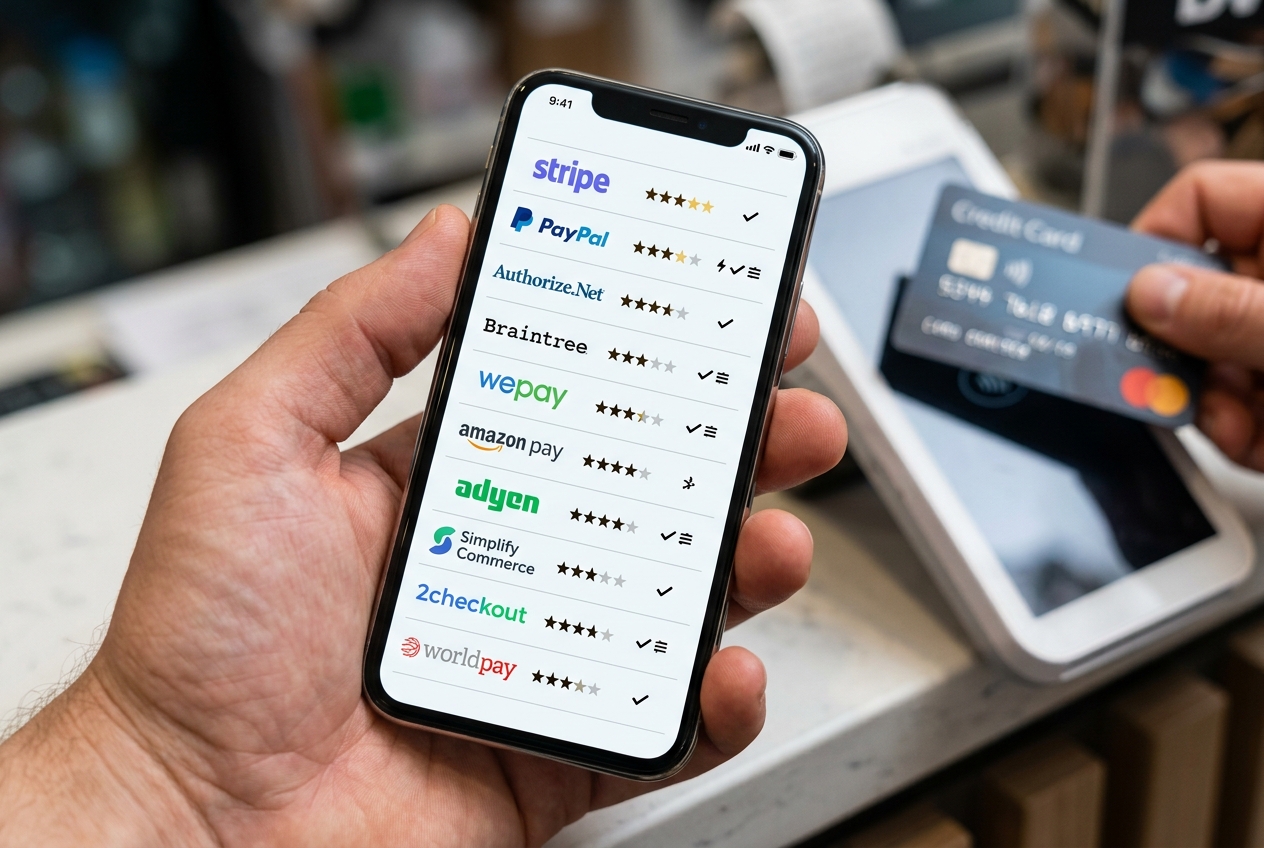
Popular Gateway Options
PayPal — Broad reach and familiar checkout
Useful when customer familiarity and simple setup are priorities; verify current fees and country eligibility.
Stripe — Growing businesses and custom checkout
Strong developer tools, recurring billing, reporting, and customizable payment flows.
Authorize.Net — U.S.-focused merchants
Established gateway with card and e-check support, recurring payments, invoicing, and fraud tools.
Braintree — Cards and digital wallets
PayPal-backed option with broad payment-method support and integration flexibility.
WePay — Embedded and platform payments
API-oriented option for businesses that want payments integrated into their workflow.
Amazon Pay — Product-led e-commerce
Familiar customer experience for businesses whose shoppers prefer an Amazon-style checkout.
Adyen — Global and higher-volume operations
Broad local payment methods, unified online/offline capabilities, and enterprise-oriented controls.
Simplify Commerce — Simple U.S. checkout
Straightforward Mastercard-powered gateway with API and security features.
2Checkout — Subscriptions and global digital sales
Useful for multi-currency and recurring billing scenarios, subject to current market availability.
Worldpay — Established international payments
Broad payment-method and currency support for merchants operating across markets.
Gateway Types: Which Experience Fits?
- Redirect checkout: the customer leaves the merchant site to complete payment.
- Hosted/off-site checkout: the provider handles much of the payment experience.
- On-site/integrated checkout: payment stays within the merchant experience and usually offers greater technical control.
Final Takeaway
The right gateway is the one that fits your customers and operating model—not necessarily the one with the lowest advertised rate. Compare total cost, coverage, checkout friction, integration requirements, payout timing, and accounting workflow together.