Quick takeaway: A high-risk classification does not automatically mean a business is doing something wrong. It usually means processors see a greater potential for chargebacks, fraud, regulatory exposure, financial instability, or payment-related losses.
What Is a Payment Gateway?
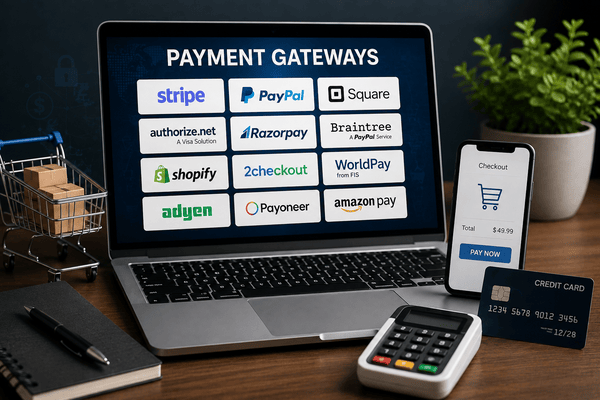
A payment gateway securely connects a customer's payment method with the business and its processor. It transmits payment information, supports authorization, and helps protect sensitive transaction data.
How Businesses Are Classified by Risk
- Low-risk: predictable revenue, limited disputes, and relatively low regulatory exposure.
- Middle/gray-risk: business models that may receive moderate scrutiny because of legal, ethical, or operating considerations.
- High-risk: greater exposure to chargebacks, fraud, regulation, volatile revenue, or financial losses.
10 Warning Signs of Higher Payment Risk
1. Frequent chargebacks
A high dispute rate can signal customer dissatisfaction or fraud exposure.
2. Subscription or recurring billing
Recurring charges can create more cancellation and dispute risk.
3. International sales
Cross-border transactions can introduce currency, fraud, and regulatory complexity.
4. Regulated products or services
Additional rules can increase underwriting requirements.
5. Large transaction values
High-ticket transactions can create larger losses when disputes occur.
6. Rapidly changing sales volume
Sharp changes may make revenue harder to underwrite.
7. Long fulfillment periods
Customers may dispute charges before receiving the product or service.
8. Negative processing history
Prior holds, excessive disputes, or account closures can affect future underwriting.
9. Weak website or policy information
Unclear pricing, refund, shipping, or contact information can reduce processor confidence.
10. Unstable or difficult-to-verify business information
Inconsistent ownership, address, product, or banking information can trigger additional review.
Low-Risk vs. High-Risk: What Changes?
| Area | Lower-risk profile | Higher-risk profile |
|---|---|---|
| Approval | Usually simpler | More documentation and underwriting |
| Fees | Often more predictable | May be higher |
| Reserves | Less common | Rolling or other reserves may apply |
| Transaction limits | Generally standard | Limits may be imposed |
| Contract terms | Standard | Stricter terms may apply |
How to Choose a Gateway if You Are High-Risk
- Be transparent about your business model.
- Prepare ownership, banking, website, product, and compliance documents.
- Ask about reserves, chargebacks, termination rights, and settlement timing.
- Compare total cost rather than only the advertised processing rate.
- Choose a provider that explicitly supports your industry and geography.
- Maintain accurate refund, shipping, and customer-service policies.
FAQs
Does high-risk mean illegal?
No. High-risk is a payment-processing classification, not a statement that a business is illegal.
Why do high-risk businesses pay more?
Processors may price for greater expected losses, underwriting effort, fraud exposure, or chargeback risk.
Can a high-risk business get approved?
Yes, depending on the industry, provider, geography, documentation, and underwriting outcome.
What is a rolling reserve?
It is an amount of transaction funds a processor may hold temporarily to help cover future disputes or losses, subject to the merchant agreement.
Can a business reduce its risk classification?
It may be possible to improve the factors processors review by reducing disputes, improving documentation, stabilizing operations, and maintaining a strong processing history.
Final Takeaway
Payment risk is about exposure, not simply business size. Understanding the warning signs early helps a company prepare documentation, choose realistic payment providers, and avoid surprises around fees, reserves, and account restrictions.