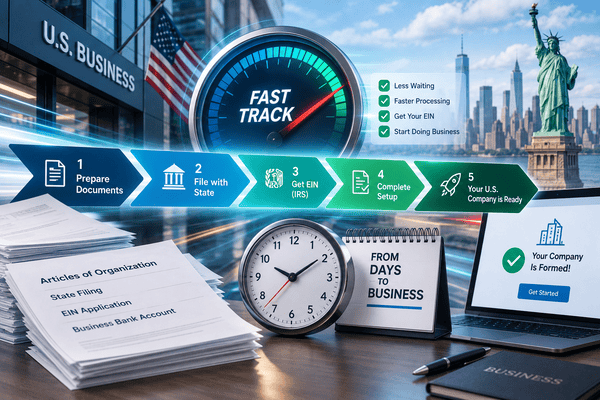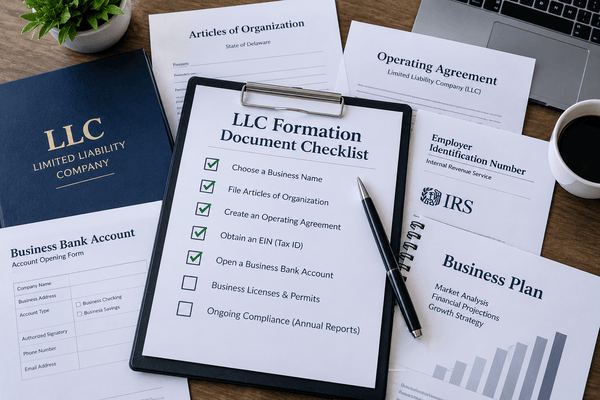
Quick answer: A Limited Liability Company (LLC) is a flexible U.S. business structure that can provide liability protection, flexible tax treatment, and simpler management than many traditional corporate structures. Large corporate groups can also use LLCs for particular subsidiaries, assets, projects, or operating units.
At a Glance
LLCs are not limited to freelancers or very small businesses. The source article highlights examples involving technology, entertainment, finance, transportation, retail, healthcare, energy, beverages, aerospace, and other industries. The common theme is structural flexibility: an LLC can be used to separate activities, manage risk, and adapt ownership or tax treatment to a business’s needs.
What Is an LLC? A Simple Explanation
LLC stands for Limited Liability Company. The central idea is to create a legal separation between the business and its owners. In general, that means personal assets are separated from many business liabilities, subject to the applicable law and the owner maintaining the required separation between personal and business affairs. An LLC can also offer tax flexibility. Depending on the circumstances and elections made, an LLC may receive pass-through tax treatment or may elect to be taxed under a different classification. Management is usually more flexible than the formal structure required for a corporation. The important lesson is that an LLC is not simply a “small-business†option. The structure can also be useful inside a much larger corporate organization.
LLC vs. Other Common Business Structures
| Structure | Liability protection | Typical tax approach | Management | Often suited to |
|---|---|---|---|---|
| LLC | Generally yes | Flexible; often pass-through | Flexible; no board required | Freelancers, e-commerce, services, subsidiaries |
| Sole proprietorship | No separate legal shield | Pass-through | Owner manages business | Very small businesses |
| S corporation | Yes | Pass-through, with eligibility rules | Formalities and governance requirements | Eligible U.S. businesses seeking specific tax treatment |
| C corporation | Yes | Corporate taxation | Board and shareholder structure | Companies seeking significant outside equity |
| Partnership | Depends on structure | Often pass-through | Shared by partners | Businesses owned by multiple partners |
10 Real-World LLC Examples
The following examples are rewritten from the supplied source document. Each illustrates a different reason an LLC structure may be used within a business or corporate group.
1. Google LLC — A Flexible Structure Behind a Tech Giant
Google began as a small technology venture and grew into one of the world’s most recognizable technology businesses. The source describes Google LLC as part of the company’s U.S. restructuring.
Industry & role: Search, digital advertising, cloud computing, and software technology. Why an LLC?: Using an LLC can allow a large organization to separate particular operations and assets while creating a legal structure tailored to the needs of individual business units. Key insight: Growth does not automatically make the LLC structure irrelevant. Large organizations can continue using LLCs strategically when the structure fits a particular operation. Interesting fact: The source notes that Google has kept its “I’m Feeling Lucky†button despite the potential advertising revenue associated with users bypassing search results.
2. Blockbuster LLC — A Case Study in Business Change
Blockbuster became synonymous with video rental before changing technology and consumer behavior transformed the industry.
Industry & role: Home entertainment and video rental. Why an LLC?: According to the source, an LLC structure could provide flexibility around asset management, licensing, ownership changes, and business wind-down activities. Key insight: An LLC cannot prevent a company from being disrupted by market changes, but it can provide a flexible legal framework for managing assets and operations during periods of transition. Interesting fact: The source recalls that Blockbuster had an opportunity to acquire Netflix for approximately $50 million in 2000 but did not proceed with the deal.
3. IBM Credit LLC — Supporting Technology Financing
IBM Credit LLC is presented as a financing arm connected with IBM and designed to help customers obtain financing for IBM products and services.
Industry & role: Financial services and technology financing. Why an LLC?: An LLC can provide liability protection while giving a business flexibility when structuring financial arrangements across different jurisdictions. Key insight: This example shows that an LLC can sit inside a larger corporate group and handle a specialized activity while remaining part of the parent company’s broader business strategy. Interesting fact: The source highlights a process improvement that reduced loan-approval time from days to hours by improving communication between departments.
4. Hertz Vehicles LLC — Separating Fleet Assets
Hertz Vehicles LLC is described as an entity under the Hertz umbrella focused on ownership and leasing of vehicle assets.
Industry & role: Vehicle rental, fleet ownership, and leasing. Why an LLC?: For an asset-heavy operation, placing vehicle assets in a separate LLC can help isolate those assets from other business risks and simplify financing, lease arrangements, and depreciation tracking. Key insight: Separating a major asset group can be a practical way to manage risk inside a larger organization. Interesting fact: The source mentions a luxury rental program involving a customized Corvette offered at a daily rate.
5. Amazon Services LLC — Structuring a Global Marketplace
Amazon Services LLC is presented as an LLC handling important U.S. business activities connected with Amazon’s marketplace operations.
Industry & role: E-commerce and marketplace services. Why an LLC?: The source describes the LLC structure as a way to separate liability, take advantage of applicable state tax treatment, and maintain operational flexibility. Key insight: Even very large global businesses can use separate legal entities to keep business activities organized and financially distinct. Interesting fact: The source notes that Amazon’s early warehouse workers could walk the equivalent of many miles each day while picking orders, contributing to the company’s investment in automation and robotics.
6. Johnson & Johnson LLC — Managing Specialized Healthcare Operations
Johnson & Johnson is described as operating certain subsidiaries as LLCs, particularly where activities are organized around specific products or regions.
Industry & role: Pharmaceuticals, medical devices, healthcare, and consumer products. Why an LLC?: LLCs can help separate liabilities connected with particular product lines, support intellectual-property arrangements, and simplify partnerships or joint ventures. Key insight: In highly regulated industries, separating activities through appropriate legal entities can help contain risk while allowing operations to continue. Interesting fact: The source uses Johnson & Johnson’s “No More Tears†baby-shampoo slogan as an example of a widely recognized product claim.
7. ExxonMobil LLC Entities — Managing High-Risk Energy Activities
ExxonMobil is presented as a major energy company that also uses LLCs for some U.S. subsidiaries and projects.
Industry & role: Oil, gas, petrochemicals, and energy. Why an LLC?: For certain projects, including joint ventures or higher-risk extraction activities, an LLC can help separate liabilities and provide flexibility in how a project is organized. Key insight: Energy projects can carry significant environmental, operational, and legal exposure, so entity-level separation can be an important part of a larger risk-management strategy. Interesting fact: The source mentions ExxonMobil research into fuel derived from algae as an experimental alternative energy project.
8. Anheuser-Busch Companies, LLC — Supporting a Global Beverage Business
Anheuser-Busch is described as operating its U.S. headquarters entity as Anheuser-Busch Companies, LLC.
Industry & role: Brewing, beverage distribution, and consumer products. Why an LLC?: The source points to operational flexibility, distribution agreements, and smoother integration of acquisitions as potential reasons for the LLC structure. Key insight: An LLC can remain useful even for a long-established global brand when flexibility in ownership, operations, and legal organization is valuable. Interesting fact: The source notes that during Prohibition, Anheuser-Busch adapted by selling non-alcoholic products and even producing ice cream.
9. SpaceX Holdings LLC — Structuring Space-Industry Operations
SpaceX Holdings LLC is presented as an entity involved in certain operational and ownership aspects of SpaceX.
Industry & role: Aerospace, reusable rockets, and satellite launches. Why an LLC?: The source explains that an LLC can help separate investment interests, support joint ventures, and protect core assets from particular project-level risks. Key insight: In an industry where projects can involve unusually high technical and financial risks, carefully structured legal entities can provide an additional layer of separation. Interesting fact: The source notes that SpaceX’s first Falcon 1 rocket launches failed before the company eventually achieved orbit on its fourth attempt.
10. Uber Technologies, LLC — From Rapid Growth to a Public Company
Before becoming Uber Technologies, Inc., Uber operated as Uber Technologies, LLC during an important period of rapid expansion.
Industry & role: Ride-hailing, transportation technology, food delivery, and logistics. Why an LLC?: The LLC structure gave Uber flexibility while it was scaling quickly and provided a framework for separating business liabilities during its early growth. Key insight: This example illustrates how a business can use an LLC during an early or transitional stage and later change its legal structure as its financing and growth requirements evolve. Interesting fact: The source notes that Uber originally operated under the name “UberCab†and that its first app was available only on iPhones.
Why Do Successful Companies Use LLC Structures?
The examples above point to several recurring reasons businesses may choose an LLC. The exact benefits depend on the state, the operating agreement, tax elections, ownership structure, and the nature of the business.
- Liability separation: An LLC can create a legal boundary between business obligations and the owners’ personal assets, subject to applicable law.
- Flexible ownership and management: LLCs can be structured for a single owner, multiple members, or more complex ownership arrangements.
- Tax flexibility: LLCs generally offer multiple tax-classification possibilities, including common pass-through treatment and, where eligible, elections for corporate tax treatment.
- Entity-level organization: Large businesses can use separate LLCs for different operations, assets, projects, subsidiaries, or joint ventures.
- Potential privacy benefits: Depending on state law and filing requirements, ownership information may receive different levels of public disclosure.
- Simpler formalities than many corporations: LLCs generally do not require the same board-and-shareholder framework associated with traditional corporations.
Potential Drawbacks of an LLC
An LLC is flexible, but it is not automatically the best choice for every business. The source highlights several issues entrepreneurs should evaluate before forming one.
- Self-employment taxes may apply to active LLC income depending on the owner’s circumstances and tax classification.
- State filing fees, annual reports, franchise taxes, and other recurring charges vary significantly by state.
- Venture-capital investors may prefer a corporation, particularly a Delaware C corporation, because of its familiar stock and preferred-equity structure.
- Multi-member LLCs need a clear operating agreement. Without one, disagreements over ownership, management, distributions, or decision-making can become expensive.
- Formation and compliance costs can be higher than operating as a sole proprietorship.
Important: The supplied source gives general U.S. LLC guidance. State rules and tax outcomes can differ, so entrepreneurs should confirm current requirements for the state and tax classification relevant to their situation.
Can One Person Form an LLC?
Yes. A single-member LLC has one owner and is a common business structure in the United States. The source also explains that non-U.S. entrepreneurs can form a U.S. single-member LLC without a U.S. co-founder. The source specifically mentions entrepreneurs from countries such as Bangladesh, India, Nigeria, and Pakistan as examples of non-U.S. founders who may form a U.S. LLC remotely. It describes a valid passport, a U.S. registered agent, and an Employer Identification Number (EIN) as key parts of the process. However, forming an LLC and opening financial accounts are separate matters. Banks, payment processors, and marketplaces can apply their own verification and compliance requirements.
When Is an LLC a Good Fit?
- Freelancers and independent professionals
- E-commerce and online sellers
- Consulting and service businesses
- Businesses owned by one or several members
- Foreign entrepreneurs establishing a U.S. business entity
- Corporate groups that need separate entities for particular assets, operations, or projects
If the primary goal is raising significant venture capital, issuing complex equity, or building a traditional investor-backed startup structure, a corporation may be more appropriate.
LLC vs. Corporation: The Practical Difference
An LLC generally emphasizes flexibility. Ownership can be structured without the traditional stock-and-board framework of a corporation, and tax treatment can be flexible. A corporation, by contrast, uses a more formal governance system and can be better suited to businesses that expect to issue stock broadly or raise institutional equity. The right choice depends on the business model, ownership, financing plans, tax position, state requirements, and long-term goals—not simply on company size.
Key Takeaways
- LLCs are used across industries and at many stages of business growth.
- Large companies can use LLC subsidiaries or entities for specific operations, assets, projects, or investments.
- Liability protection, flexible management, and tax flexibility are major reasons businesses consider LLCs.
- A single person can form a single-member LLC in the United States.
- Non-U.S. founders may also form U.S. LLCs, but banking, tax, EIN, payment-processing, and compliance requirements must be considered separately.
- An LLC is not automatically the best structure for every company; businesses seeking venture capital or complex equity financing may prefer a corporation.
Frequently Asked Questions
What are some examples of LLC businesses?
Examples discussed in the supplied source include Google LLC, Blockbuster LLC, IBM Credit LLC, Hertz Vehicles LLC, Amazon Services LLC, certain Johnson & Johnson LLC entities, ExxonMobil LLC entities, Anheuser-Busch Companies, LLC, SpaceX Holdings LLC, and Uber Technologies, LLC.
What are some well-known companies that use LLC entities?
The source highlights Amazon Services LLC, Google LLC, Chrysler Group LLC, Hertz Vehicles LLC, IBM Credit LLC, and Anheuser-Busch Companies, LLC among recognizable examples.
Is Amazon an LLC?
Amazon.com, Inc. is a corporation, while Amazon Services LLC is an LLC entity associated with Amazon. The distinction illustrates how a large corporation can use LLC subsidiaries or related entities for specific operations.
How is an LLC different from a corporation?
An LLC generally offers more flexible management and ownership arrangements and may receive pass-through taxation. Corporations use formal stock, shareholder, and board structures and can be advantageous for certain types of outside investment.
Can a single person start an LLC?
Yes. A single-member LLC can have one owner. The source also notes that non-U.S. residents may form U.S. LLCs without a U.S. co-founder.
What businesses are a good fit for an LLC?
Freelancers, consultants, service businesses, e-commerce sellers, and many small or growing businesses can be good candidates. LLCs can also be used by larger corporate groups for specialized entities.
How many members can an LLC have?
Most states permit both single-member and multi-member LLCs, and many do not impose a general upper limit on members. The exact rules depend on state law.
What are the disadvantages of an LLC?
Potential disadvantages include formation and annual costs, possible self-employment tax, state-specific compliance requirements, and less suitability for some venture-capital financing structures.
Final Perspective
The strongest lesson from these examples is that an LLC is a tool for structuring a business—not a label reserved for small companies. From technology and transportation to retail, healthcare, finance, energy, and aerospace, the source shows how LLC entities can be used to separate activities, manage risk, and preserve operational flexibility. For a founder, the decision should begin with the business’s actual needs: who owns it, how it will be managed, what risks it faces, how it will be taxed, whether outside investors are expected, and where it will operate. Once those questions are clear, the LLC-versus-corporation decision becomes much easier to evaluate.
About the Source
This document is a rewritten and reorganized version of the supplied PDF titled “10 LLC Examples: Real Companies That Use This Structure.†The rewrite keeps the source’s core topics, examples, and explanations while using new headings, refreshed wording, and a more structured editorial format. Company/entity status and legal or tax rules can change over time and should be independently confirmed before publication or business use.