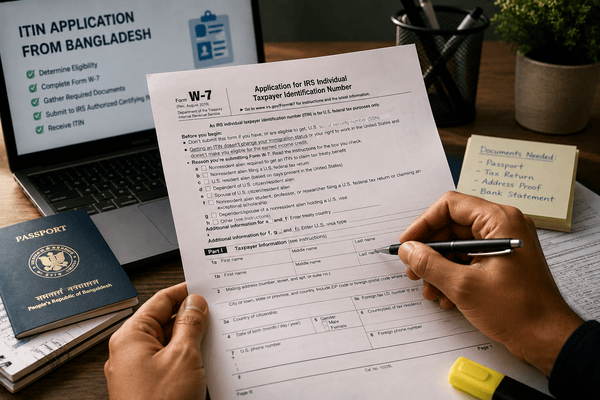
You applied for an ITIN expecting an approval letter, but instead of a CP565 Notice, you find "IRS Notice CP567" in your mailbox. That means your application didn't go through. Before you panic, take a breath — a CP567 Notice isn't the end of the process. It's simply the IRS telling you why your ITIN application was rejected and how to fix it. Understanding what this letter means and acting on it correctly is the difference between losing another few weeks and restarting the whole process. Let's walk through it clearly.
What Is a CP567 Notice?
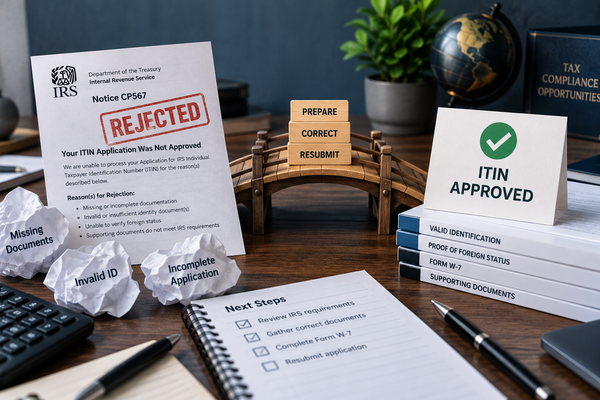
A CP567 Notice is an official rejection letter from the IRS stating that your ITIN application has been denied. It's the IRS's way of saying, "We reviewed your Form W-7, but something didn't meet the requirements." Unlike a CP566 Notice, which means you're missing documents, a CP567 Notice means your file was fully reviewed and the IRS decided not to issue your ITIN. The notice also explains why your application was rejected. Common reasons include:
- Your documents didn't prove identity or foreign status.
- You didn't provide a valid tax filing reason.
- You already have an active ITIN or SSN.
- The information you submitted conflicted with IRS records.
- You failed to respond to a prior CP566 Notice within 45 days.
Think of this letter as your guide to understanding what went wrong — not necessarily a final wall.
The Five Most Common Reasons ITIN Applications Get Rejected
Most ITIN rejections fall into a handful of predictable categories:
- Invalid or uncertified documents: The IRS couldn't verify your identity because your passport or ID wasn't certified by the issuing authority or a Certified Acceptance Agent (CAA).
- Incorrect or missing reason for applying: You didn't clearly state why you need an ITIN. The IRS only issues ITINs for valid tax purposes — filing a federal return, claiming dependents, or reporting US income.
- Duplicate application: You already have an ITIN or a Social Security Number. The IRS won't issue duplicates under any circumstances.
- Expired documents or a late response: Failing to respond to a CP566 Notice, or sending expired documents, automatically moves your case to rejection.
- Incomplete or mismatched application: Your W-7 may not have been attached to the right tax form, or your filing address or country details didn't match your supporting documents.
Five Steps to Take After Receiving a CP567 Notice
- Read the notice carefully. It specifies the exact reason for rejection — don't skip this step, since each case is different.
- Fix the specific issue identified. If the IRS questioned your ID, get a certified passport copy or use a CAA to verify it. If your tax return was missing, attach it this time. If you used the wrong reason code, correct it on Form W-7.
- Prepare a new Form W-7. The IRS doesn't reopen old applications — you'll need to reapply with a fresh form and corrected documents.
- Choose the right submission channel. Mail your full application package to the IRS address listed in the notice, or go through a Certified Acceptance Agent — the easier option, especially if you're abroad, since a CAA verifies your documents locally and submits your case directly to the IRS.
- Wait for review. Once the IRS receives your corrected file, your new ITIN is usually approved within 7 to 11 weeks (longer during tax season).
Five Small Mistakes That Cause a CP567 Notice
A CP567 Notice usually comes down to small but critical oversights — the kind that seem minor until the IRS flags them:
- Sending scanned or photocopied passports instead of certified copies verified by the issuing authority or a CAA.
- Leaving the reason box on Form W-7 blank, or writing something vague. The IRS wants to know exactly why you're applying — to file taxes as a nonresident, claim dependents, report as a spouse, verify student status, or handle income from US investments or property.
- Forgetting to attach your federal tax return when your application requires it.
- Mixing personal and business filings, such as using business tax details for a personal ITIN or vice versa.
- Submitting mismatched information — names, addresses, or birth dates that don't line up across your forms and IDs.
Every one of these is fixable. Reviewing your paperwork carefully — or better yet, filing through an IRS-approved Certified Acceptance Agent — keeps you out of this trap the next time around.
Five Ways to Prevent Future ITIN Rejections
A CP567 Notice is frustrating, but it's also a chance to get things right the next time. Here's how to avoid another rejection:
- Work with an IRS-authorized Certified Acceptance Agent (CAA). A CAA reviews and certifies your documents before submission, minimizing the risk of rejection.
- Download the latest Form W-7 directly from IRS.gov. Outdated versions are one of the most common causes of rejection.
- Keep all previous IRS correspondence, including your CP567 Notice and any related notices, as reference material when reapplying.
- Double-check document validity. Never reuse expired passports, IDs, or forms.
- Be consistent across every form. Make sure your name, date of birth, and address match perfectly across your tax return and supporting documents.
A correctly filled and verified ITIN application rarely faces rejection twice — especially once you've learned from the first attempt and corrected every detail the IRS flagged.
Cloudtech: Fixing CP567 Cases the Right Way
If your ITIN was rejected, don't waste another 11 or 12 weeks repeating the same mistake. At Cloudtech, we're the first IRS-authorized Certified Acceptance Agent (CAA) in Bangladesh, helping clients worldwide fix ITIN rejection cases fast and correctly. We review your rejection letter, pinpoint the cause, verify your documents locally (no need to mail your passport to the US), and refile your ITIN package directly with the IRS. Whether your case involves personal tax filing, dependent claims, or business compliance, our IRS-vetted process ensures your next application doesn't bounce back again.
Frequently Asked Questions
Does the IRS notify you of rejection?
Yes. The IRS sends an official CP567 Notice when your ITIN application is rejected. It explains exactly why — missing documents, an expired ID, or incorrect details. Keep this letter safe; it's your guide for fixing and resubmitting your application.
How long does it take the IRS to accept or reject an ITIN application?
Usually about 7 to 11 weeks. If something's missing or unclear, you'll get a CP566 or CP567 Notice instead of an approval letter. During tax season, or if you applied from outside the US, expect it to take a little longer.
Can I reapply immediately after receiving a CP567 Notice?
Yes. Just fix what the notice points out first, then submit a new Form W-7 with all your documents updated and correct before sending it again.
What's the difference between a CP565, CP566, and CP567 Notice?
- CP565 Notice: Confirms your ITIN has been approved.
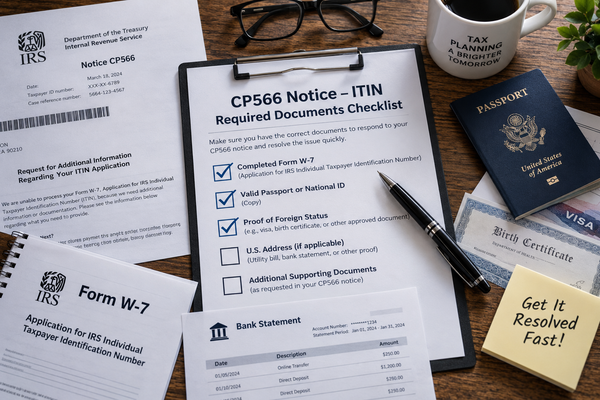
- CP566 Notice: Means your application is incomplete or missing documents.
- CP567 Notice: Indicates your ITIN application was rejected and needs correction before resubmission.
Can I still file taxes after receiving a CP567 Notice?
Not until your ITIN is approved. You'll need a valid ITIN to file or claim tax benefits. Once you reapply and the IRS approves it, you can submit your tax return normally.
Who can help fix an ITIN rejected by the IRS?
An IRS-Certified Acceptance Agent (CAA), such as Cloudtech, can help by reviewing your CP567 notice, ensuring your documents are in order, and resubmitting your ITIN application correctly to avoid further rejections.
Closing Thoughts
Getting a CP567 Notice can feel like a setback, but it's not the end of your ITIN process — there's always a path forward. Once you understand the reason behind your rejection and address it properly, approval is completely within reach. And if you'd rather not go through another round of guesswork, working with an IRS-authorized Certified Acceptance Agent (CAA) like Cloudtech makes all the difference. Because when it comes to tax filing with an ITIN, every nonresident deserves accuracy, peace of mind, and a clear green light from the IRS.