A customer disputes a charge, your bank yanks the money back, and suddenly you're out both the sale and the product. If that sequence sounds familiar, you already know how frustrating chargebacks can be. The good news: you don't have to accept the loss quietly. Chargeback representment lets you challenge the dispute with solid evidence, and if you make your case well, you get your money back. Winning a representment case comes down to three things: understanding why the chargeback happened, gathering the right evidence, and following the dispute process precisely. This guide walks through all of it, from the root causes of chargebacks to the tools that prevent them and the exact steps for drafting a rebuttal that gets results.
What Counts as a Chargeback Dispute?
A chargeback is money returned to a customer's card after they successfully dispute a transaction. The dispute itself begins when a customer contacts their bank or card issuer because they're unhappy with a purchase — maybe they don't recognize the charge, or they believe something went wrong. The bank reviews the claim, weighs the customer's evidence, and decides whether to reverse the payment. The entire system exists to protect cardholders from fraud and unauthorized use of their cards.
Why Customers File Chargebacks
Disputes stem from a handful of recurring situations. Recognizing which one applies to your case is the first step toward building a strong response.
- Late delivery: If an order takes longer than roughly 10 days to arrive, the customer can file a dispute — even if the item eventually shows up.
- Defective or incomplete goods: When products arrive damaged or missing parts, some customers skip the merchant entirely and go straight to their bank.
- Billing errors: An incorrect charge amount, often from manual data entry like phone orders, is a common trigger. One keystroke mistake during a busy shift can cause it.
- Buyer's remorse disguised as a dispute: A customer regrets a purchase and requests a refund through their bank instead of the merchant's return process. This is known as friendly fraud — using a chargeback to bypass a legitimate return policy.
- Stolen card information: When someone uses stolen card details, that's genuine fraud. The cardholder is protected and won't lose money, but under current card network rules, merchants can be held financially responsible if they didn't properly verify the cardholder.
- Inaccurate product listings: A mismatched size, color, or description can push an unhappy customer to their bank instead of the merchant — another form of friendly fraud.
- Exploiting the system for free goods: Some buyers ignore return policies or falsely claim non-delivery just to keep an item without paying for it. This behavior, known as cyber shoplifting, is becoming more common and hurts merchants and honest customers alike.
Five Habits That Keep Chargebacks From Happening
- Set clear expectations. Give customers accurate details on pricing, delivery timelines, and refund policies, and communicate quickly whenever something changes.
- Verify who's actually buying. Use address verification and card checks to confirm the purchaser matches the billing information on file.
- Lock down your payment process. Choose a secure payment gateway and add fraud tools like CVV checks or 3D Secure.
- Document everything. Keep delivery confirmations, invoices, and receipts on hand so you have proof ready if a dispute lands.
- Use chargeback protection technology. These tools flag risky transactions before they become disputes. Cloudtech offers this service directly to merchants who want an added layer of protection.
Three Types of Chargeback Prevention Tools
Because chargebacks stem from so many different causes, no single tool solves the problem. Stacking too many tools, or the wrong combination, can backfire. The smarter approach is understanding what each category does and applying the right mix for your business.
- Pre-transaction tools catch risk signals and fix problems before a payment is even processed.
- Post-transaction tools resolve disputes before they escalate into a full chargeback.
- Source detection tools identify the root cause behind a chargeback so you can prevent it from recurring.
Pre-Transaction Tools: Stopping Fraud Before It Starts
Pre-transaction tools fall into two categories: fraud screening, which verifies that buyers are who they claim to be, and fraud scoring, which analyzes multiple risk factors to assess a transaction before it clears. Fraud screening tools include:
- Address Verification Service (AVS): Flags a transaction as suspicious if the billing address doesn't match what's on file with the bank.
- Card security codes: The numbers printed on the card that prove the customer physically has it. Merchants can't store these, which adds a layer of protection.
- 3-D Secure 2.0: Requires a PIN-like code during checkout so only the actual cardholder can complete the purchase.
- Fraud blacklists: Block known fraudsters by device or location to stop repeat offenders.
- Visa Account Updater (VAU): Automatically refreshes card information on file when a customer's card changes, preventing failed payments.
- Velocity limits: Track how quickly multiple purchases happen, catching patterns typical of stolen-card use.
Fraud scoring services use automated systems to assign a trustworthiness score to each transaction. Providers worth knowing:
- Kount: Uses advanced technology to cut payment reversals and is trusted by major payment processors.
- Riskified: Applies AI to help online stores catch fraud while approving legitimate orders smoothly.
- Signifyd: Offers fraud protection with a full-refund guarantee if fraud slips through, while reducing false declines.
- Ravelin: Uses machine learning and global data networks to help businesses accept payments with more confidence.
Post-Transaction Tools: Catching Disputes Before They Become Chargebacks
These tools won't fix the underlying cause of a dispute, but they buy you a chance to resolve it before it turns into a full chargeback. Most merchants use them as a first line of defense. They fall into two groups: chargeback alerts and network inquiries. Chargeback alert tools:
- Verifi CDRN (Cardholder Dispute Resolution Network): Alerts you the moment a customer disputes a charge, so you can stop shipping goods or providing services before losses pile up.
- Ethoca Alerts: Notifies you before a bank pulls funds from your account, giving you a window to resolve the issue first. Ethoca works with more than 5,100 banks worldwide.
Network inquiry tools, offered through Visa and Mastercard partners, let a bank request more transaction details from you before filing a formal chargeback — which is especially useful for catching friendly fraud early:
- Verifi Order Insight: Works with Visa Resolve Online to give card issuers real-time order and customer details, making it easier for banks to confirm a sale is legitimate.
- Ethoca Consumer Clarity: The Mastercard equivalent — shares purchase details like location, items bought, and digital receipts to speed up resolution.
- Rapid Dispute Resolution (RDR): A Verifi tool that lets you set automatic rules for handling unresolved complaints, such as auto-approving refunds to head off a chargeback entirely.
Source Detection: Fixing the Root Cause
Source detection tools identify why chargebacks are happening in the first place. Without knowing the cause, you're only ever treating symptoms. These tools point you toward the actual fix, whether that's a process gap, a product issue, or a fraud pattern. Preventing chargebacks and protecting your revenue takes more than good tools — it takes time and consistent follow-through, which many businesses simply don't have. That's where Cloudtech's chargeback protection technology comes in: it safeguards your business from fraudulent disputes so you can focus on growth instead of firefighting.
What Chargeback Representment Actually Means
Chargeback representment is the formal process of fighting a disputed payment by presenting evidence to the bank that the transaction was legitimate and the chargeback was unwarranted.
Why It's Worth Fighting Back
The most direct reason to challenge a chargeback is simple: it's your money. Businesses lose significant revenue to unfair chargebacks every year, and representment is how you recover it. There's a bigger cost to ignoring disputes, too. Racking up too many chargebacks can get your business flagged as high-risk by banks, which means higher fees or even terminated processing relationships. And letting friendly fraud slide only invites more of it — nearly half of customers who get away with a fraudulent chargeback once will do it again within 90 days. Consistently challenging unfair disputes protects your revenue, builds trust with banks and customers, and reduces how often you have to deal with this in the future.
What Happens Before You Can Respond
Before representment even starts, you need to understand why the charge was disputed — which isn't always obvious. A customer may have flagged an issue with a transaction, or the card-issuing bank may have caught something suspicious on its own. The bank then decides whether to reverse the charge and refund the customer. Once that happens, the dispute lands on your desk. Your first move is to check the reason code the bank provides — it explains why the charge was disputed. Even when the code is vague, you still need to respond to it directly.
Responding Fast: What to Do the Moment a Chargeback Notice Arrives
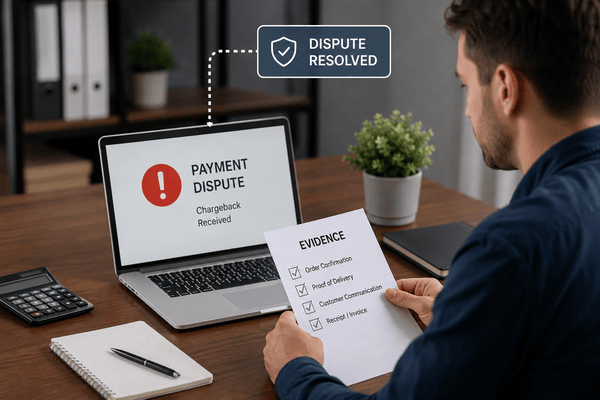
A chargeback means the card issuer has already reversed the payment, leaving you with lost revenue until you fight it. Speed matters here. As soon as the notification arrives, start gathering evidence, contact your bank or payment processor, and assemble documentation that proves the charge was valid. Acting quickly significantly improves your odds of winning and limits your financial exposure.
Seven Steps to Drafting a Winning Representment Case
A chargeback representment is your formal written response to a payment processor or bank, disputing the chargeback. Here's how to build one that holds up.
- Understand how the process works. Not every dispute is legitimate — customers sometimes file late or use the wrong reason code. Don't assume a dispute is valid just because it was filed; you can challenge it, and you'll often win easily when it's flawed from the start.
- Write a clear, simple response. The payment processor reviews your explanation before it even reaches the bank. If your case is too complicated, it may never get that far. Keep your language direct and easy to follow.
- Track the deadline closely. Every chargeback notice comes with a response deadline. Miss it, and you automatically lose. Aim to submit at least three days before the cutoff so you have room to fix any last-minute issues. If you're not sure of the timeline, ask your payment processor — they'll confirm exactly when you need to respond.
- Collect strong, specific evidence. You need to prove to the bank that the transaction was handled correctly. Gather transaction records, customer communications, and receipts, and tailor the evidence to what was actually sold — a physical product, a digital good, or a service each calls for different proof.
- Diagnose the reason code. Understand exactly why the chargeback was filed and what the customer's underlying complaint is before you write your response.
- Write the rebuttal letter. Lay out your side of the story clearly, back it with evidence and relevant policies, and keep it concise but thorough enough to directly address the customer's complaint.
- Submit and follow up. Send your rebuttal and supporting documents to the payment processor or bank before the deadline, then confirm they received it and are reviewing it. Stay ready to provide additional details if they ask.
The formula for winning representment doesn't change: a clear, well-organized response that directly addresses the customer's complaint and backs it with solid evidence. Follow these steps and submit a strong case, and you materially improve your odds of success.
What Is a Chargeback Win Rate — and How Do You Calculate It?
Your chargeback win rate is the percentage of disputes you successfully recover money from. It's calculated by dividing the number of chargebacks you won by the total number you represented:
Chargeback win rate = Chargebacks won ÷ Total chargebacks represented
You can also break this down by product type or transaction category to see where you're winning and where you're not.
The Numbers Behind Chargeback Recovery
In 2021, merchants won roughly 42% of chargeback cases on average. But winning the case and recovering the money aren't the same thing — merchants only actually recovered lost revenue in 1 out of every 8 disputes, a net recovery rate of just 12%. That gap is exactly why a disciplined, evidence-first process matters so much.
Feeling Buried in Chargebacks? Get Expert Help
If chargeback notifications are piling up faster than you can respond to them, you're not alone, and you don't have to handle it solo. Getting expert support can keep your business moving while someone else manages the dispute process.
Frequently Asked Questions
What happens if I ignore a chargeback notification?
Ignoring a chargeback is treated as an automatic acceptance — the cardholder keeps the funds, and you lose both the money and the product. Some card networks, including Visa, may also fine you for not responding. Visa typically gives merchants 30 days to respond. Remember, winning isn't just about arguing your case; you need solid evidence. And if a dispute isn't resolved, it can escalate to arbitration, which makes everything more complicated.
Is chargeback representment the same for every merchant?
No. Evidence requirements vary based on your reason code and business type. Merchants selling physical goods, digital goods like software or subscriptions, and services like marketing or consulting each need different kinds of proof. Whether the transaction was a one-time purchase or a recurring charge matters too — though some evidence, like clear communication records, applies across the board.
What is arbitration in a chargeback dispute?
Arbitration is the last resort when both sides can't reach an agreement. The card network — Visa or Mastercard — steps in to make the final call, similar to how a court resolves a legal dispute.
What is a rebuttal letter?
A rebuttal letter is your formal written response in a chargeback dispute. It explains why the charge was valid and backs that claim with evidence like transaction records and proof of delivery — essentially, it's your defense case for why the bank should reverse the chargeback and return your funds.
The Bottom Line
Chargebacks are frustrating and expensive, but they're not unbeatable. Understand why the dispute happened, gather strong evidence, and stay on top of every deadline in the process. That said, not every chargeback is worth fighting — if your case is genuinely weak, sometimes moving on is the smarter call. Ultimately, the decision is yours. But follow this process consistently, and you'll meaningfully improve your odds of winning the disputes that matter.